
Beneath the Surface
The Art of Tailored Construction
Fused, half canvas and full canvas: what lies beneath a beautifully tailored suit, blazer or overcoat, and why it matters.
A beautifully tailored jacket has a certain ease about it. The lapels roll gently towards the chest. The cloth follows the body without clinging, and the front hangs with balance whether the jacket is buttoned or open.
The fabric, cut and fitting all play a part. So does something the wearer rarely sees: the construction between the outer cloth and the lining. Canvas, interlinings and other reinforcements support the garment, influence its movement and help the tailor shape its silhouette.
Three broad approaches are often discussed: fused, half canvas and full canvas. Understanding them is useful, not because one is universally right, but because each offers a different way to support a garment.
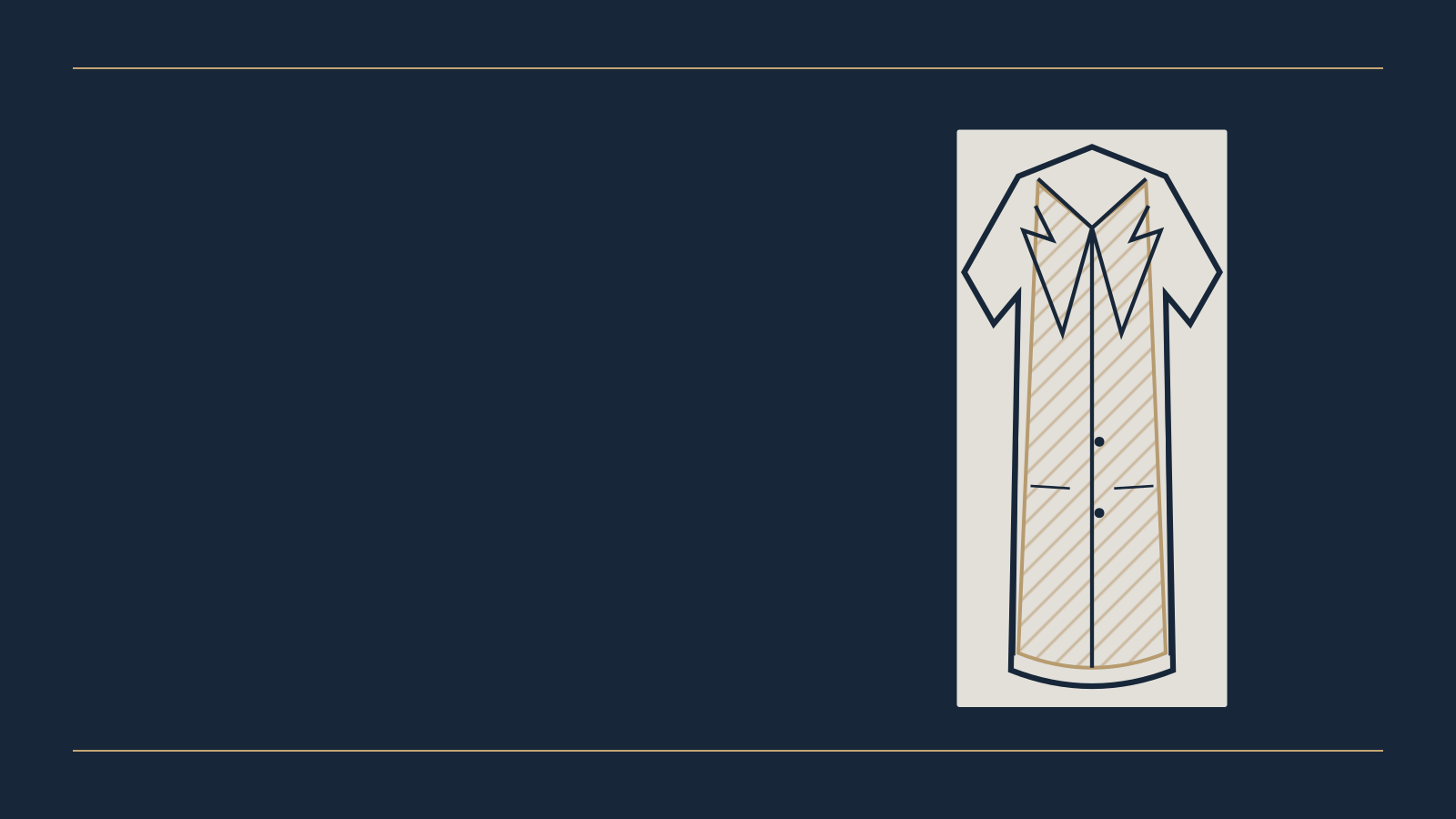
Three approaches to jacket construction. The shaded areas show the approximate extent of the principal support; actual patterns vary.
Fused construction: a bonded foundation
In a fully fused jacket, the principal front support comes from an adhesive-backed interlining bonded to the outer cloth using heat and pressure, rather than a floating sewn chest canvas. It is an efficient way to produce a consistent shape and is widely used in ready-to-wear tailoring.
Modern fusibles vary in quality, and a well-made fused garment can serve its wearer well. Bonding changes how the cloth and interlining move together, however, and the resulting feel depends on the materials and workmanship. In some garments the bond can deteriorate over time, causing bubbling or delamination; this is a possibility, not an inevitable outcome.
ENDEL does not offer fully fused jacket construction for suits, blazers or tailored overcoats.
Half canvas: structure with ease
In a half-canvas jacket, a shaped canvas is sewn into the upper front, generally through the chest and lapel area. It provides the foundation for the chest and lapel while allowing the canvas and outer cloth to move relatively independently. The exact extent and materials vary with the garment.
Half canvas is ENDEL's standard. Our construction combines a floating, sewn chest canvas with minimal, carefully chosen fusible reinforcement in selected areas where appropriate. The use of some fusible material does not make this a fully fused jacket: the distinction is how the principal chest structure is supported.
A well-executed half canvas can give a business suit a composed chest and a natural lapel roll, or lend a blazer shape without making it feel unduly formal. Its success still depends on the pattern, the materials, the cutting and the fitting.
Full canvas: an extended foundation
In full-canvas construction, the sewn canvas extends farther down the front, typically towards the hem. This gives the tailor a continuous foundation on which to shape and support more of the garment. The canvas is secured with stitching; “floating” means it is not bonded across its surface to the outer cloth, not that it is unattached.
The extended structure can be especially appealing in a formal suit, a structured blazer or a double-breasted front. It takes additional work and is available at ENDEL as a premium option. Full canvas does not necessarily mean that every operation is done by hand, nor does the term alone guarantee a better fit or a softer garment.
Comparing the constructions
| Fully fused | Half canvas | Full canvas | |
|---|---|---|---|
| Principal support | Bonded interlining | Sewn canvas through the upper front | Sewn canvas extends towards the hem |
| Relationship to cloth | Principal support is bonded | Chest canvas floats; fusible support may be used elsewhere or in selected areas | Extended canvas floats; other reinforcement depends on the maker |
| Work involved | Generally less | More work in the chest and lapel | Additional work across the extended front |
| At ENDEL | Not offered | Standard; minimal selected fusible reinforcement | Premium option |
These are broad descriptions. Weight, softness, durability and lapel roll depend on the cloth, design and execution as well as construction. A carefully made half-canvas garment can be a better choice than a poorly executed full-canvas one.
Suits, blazers and overcoats
A worsted wool business suit often benefits from the balanced support of half canvas. Full canvas offers further possibilities for shaping the lower front, particularly in a more structured or double-breasted design. The difference should be considered alongside how the suit will be worn, rather than assumed from the label.
A summer blazer may call for a lighter, softer interpretation. Half canvas can provide shape where it is needed; a lightly constructed full canvas can also work. The weight and character of the canvas matter as much as its coverage.
Overcoats introduce longer fronts and are often cut from heavier cloth, sometimes to be worn over a jacket. The cloth itself contributes body, but coating fabrics vary. Half canvas can be an excellent choice for a relaxed city coat; full canvas may offer useful control in a longer or more structured coat. The desired silhouette, fabric and comfort should guide the decision.
Beyond the canvas
Construction is only one part of good tailoring. The balance of the pattern, the position of the collar, the shoulder, sleeve pitch and the care taken at each fitting all shape the final result. A good canvas cannot rescue a poor fit, and more internal material does not automatically make a garment better.
It is also worth separating canvas coverage from handwork. Full canvas is not necessarily fully handmade, and half canvas can include skilled handwork. Ask the tailor how the garment is made and which details are appropriate to the cloth and design.
The ENDEL approach
We begin with the person, the cloth and the intended silhouette. Our standard half-canvas construction uses a floating sewn chest canvas and minimal, carefully selected fusible reinforcement. Full canvas is available as a premium option. We do not offer fully fused jackets.
The best choice is the one that lets the cloth, the cut and the wearer work in harmony. To discuss the right construction for your next suit, blazer or overcoat, visit our Bangkok atelier or explore our tailoring and pricing.
Book a consultationAbout the author
Jens
Partner at Endel Tailor Bangkok
Jens advises clients at our Sukhumvit atelier on bespoke suits, shirts and fabric selection, working daily with premium Italian and British mills such as Zegna, Vitale Barberis Canonico and Dormeuil.
More about Endel TailorRelated Articles
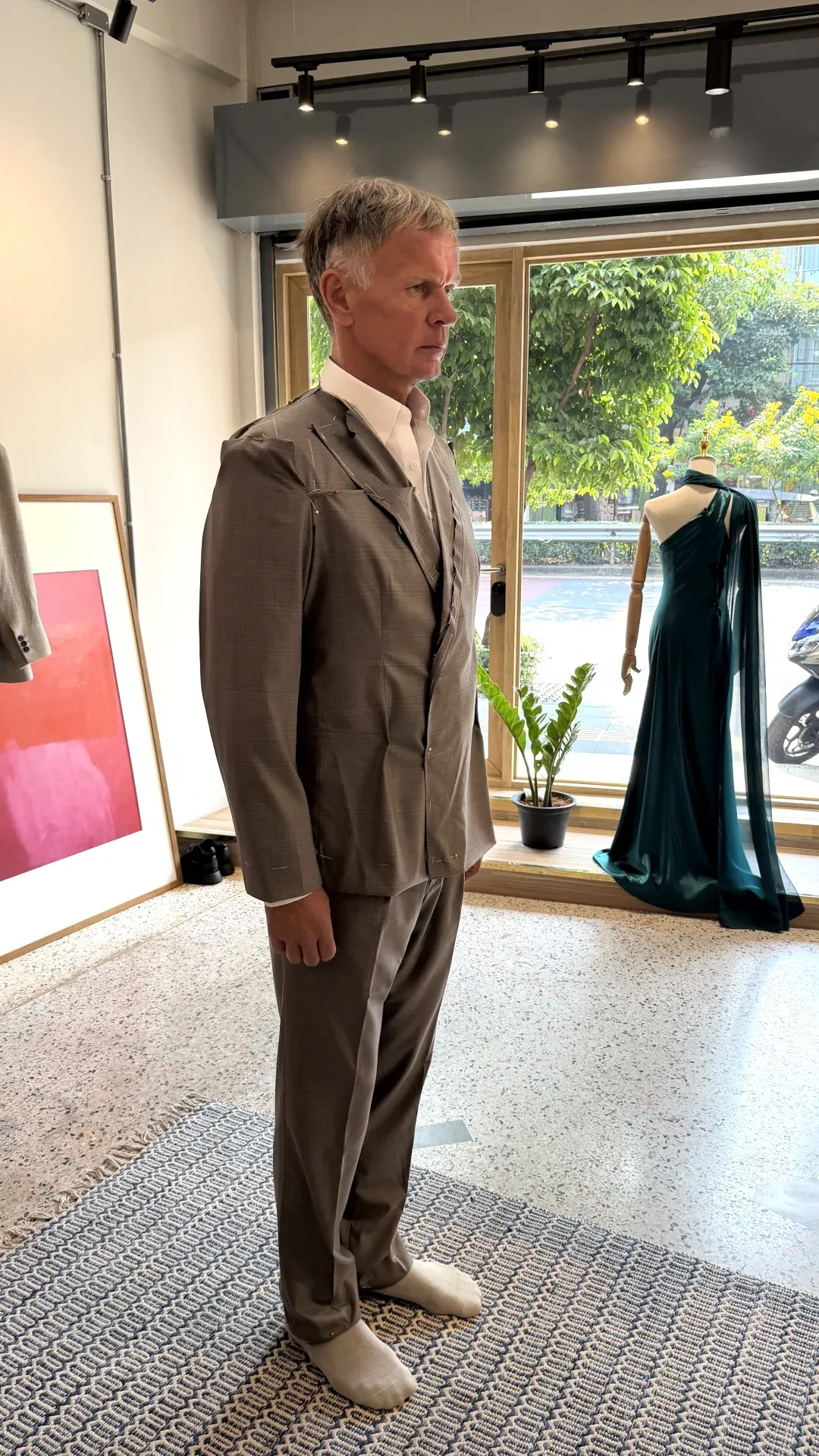
What to Expect: The Bespoke Suit Process at Endel Tailor Bangkok
Step by step through a bespoke commission at our Bangkok atelier: consultation, measurements, fittings, delivery and the aftercare most people do not expect.
Read More →
The Ultimate Guide to Selecting Your Perfect Suit Fabric
A guide to choosing the right suit fabric: weights, weaves, fibers and how each one performs across seasons.
Read More →
How Much Does a Bespoke Suit Cost in Bangkok? 2026 Price Guide
What a bespoke suit really costs in Bangkok in 2026: prices by fabric and construction level, what drives the differences, and the traps to avoid.
Read More →Ready to Get Started?
Let's create your perfect bespoke garment. Contact us to schedule a consultation.
Contact Us